

Mr Play casino Plinko game
Introduction
Plinko looks almost disarmingly simple at first glance. A ball drops from the top of the board, bounces through a field of pegs, and lands in a slot with a set multiplier. That is the whole visual idea. Yet in practice, Mr play casino Plinko creates a very different experience from a standard slot session. It is faster, more transparent on the surface, and often more psychologically intense than players expect.
I have spent enough time studying casino titles to know that the simplest layouts often hide the most important decisions. Plinko is a good example. There are no reels, no paylines, no long symbol tables to decode. Instead, the core questions are about probability distribution, risk level, hit pattern, and pacing. For a player in the United Kingdom who wants to understand what this format really offers at Mr play casino, the key is not just how it looks, but how it behaves over a real session.
This is why Plinko keeps attracting attention. It gives immediate visual feedback, each round resolves in seconds, and the result feels easy to follow. At the same time, the actual session profile can change sharply depending on settings. A low-risk setup can feel steady and controlled. A high-risk setup can become sparse, swingy, and emotionally demanding very quickly. That contrast is exactly what makes Plinko worth analysing in detail.
What Mr play casino Plinko is and why players keep noticing it
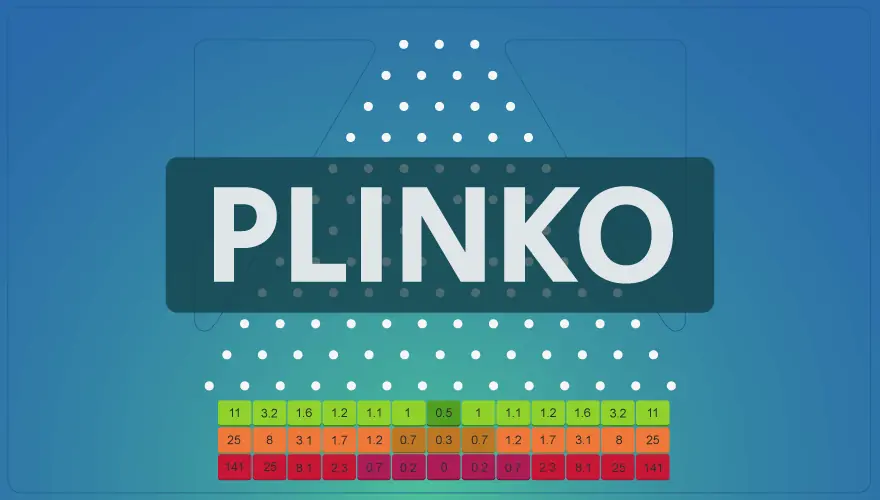
At its core, Plinko is a probability-driven casino game built around a vertical board. The player chooses a stake, usually selects a number of rows and a risk level, then drops a ball. As the ball hits pegs on the way down, it shifts left or right until it reaches one of the multiplier slots at the bottom. The further from the middle it lands, the more dramatic the multiplier tends to be. Central slots are usually more common and pay less, while edge slots appear less often and can carry significantly higher returns.
That basic structure explains much of its appeal. Plinko strips away decorative complexity and puts the outcome path in front of the player. You can literally watch randomness unfold. In many other casino games, the result is presented as a finished event. Here, there is a visible journey from release to landing, and that journey matters because it creates anticipation in a compact, repeatable way.
Another reason Plinko stands out is that it sits somewhere between instant-win simplicity and high-variance gambling. It does not ask the player to learn a large ruleset, but it also does not behave like a harmless casual diversion once the risk level increases. That gap between appearance and session reality is one of the most important things to understand before playing at Mr play casino.
One observation I find especially useful: Plinko often feels more “fair” to players simply because they can see the ball moving. That feeling is understandable, but it can also be misleading. Visible motion does not make the outcome less random. It only makes the randomness easier to watch.
How the Plinko mechanic actually works in practice
The mechanical logic of Plinko is straightforward, but the practical impact of each setting deserves attention. A typical round includes four core elements: stake size, row count, risk level, and the board’s multiplier layout. These settings shape not only possible returns, but also the emotional rhythm of the session.
When the ball is released, it encounters a sequence of peg collisions. At each contact point, it moves left or right. Over many rounds, this creates a distribution that tends to cluster around the middle slots more often than the far edges. This is why lower multipliers usually sit near the centre and larger ones are placed at the extremes. The board is not built to deliver rare top results regularly. It is built to make them possible while keeping them statistically uncommon.
Risk settings usually alter the payout map. On low risk, the multiplier spread is flatter. The centre tends to hold modest returns, and the outer slots are less extreme. On medium risk, the spread widens. On high risk, the centre can become relatively punishing while the edges carry the kind of top-end figures that attract attention in marketing and streams.
Rows matter because they affect the path complexity. More rows generally mean more peg interactions before the ball reaches the bottom. That usually produces a broader and more refined distribution curve. Fewer rows can make the board feel more compact and the outcomes less visually drawn out. More rows often increase anticipation, but they can also make the chase for edge multipliers feel even more remote over short sessions.
| Setting | What it changes | What it means for the player |
|---|---|---|
| Stake size | Direct value of each result | Higher stakes amplify swings immediately |
| Rows | Length and complexity of the ball path | More rows usually mean a longer visual build-up and a broader result spread |
| Risk level | How sharply multipliers are distributed | Higher risk increases dry patches and dependence on rare outcomes |
| Multiplier layout | Value assigned to landing zones | Shows where low-frequency, high-return outcomes sit on the board |
The important practical point is this: Plinko is not just “drop ball, get result.” It is “choose a distribution profile, then accept the consequences.” That is a more accurate way to think about the game.
Why the game feels engaging and how the session tempo develops
Plinko has a very specific pace. It resolves quickly, but not instantly. That small delay matters. The ball’s descent creates a short suspense window, and because each round is brief, players can repeat the cycle many times in a short period. This gives the format a strong rhythm: release, bounce, land, reset. Few casino games package anticipation into such a compact loop.
From a player’s point of view, that rhythm can be either a strength or a trap. It is a strength because there is very little friction. You do not need to wait through long animations or bonus sequences to understand what happened. It is a trap because the speed can make bankroll movement easy to underestimate, especially on high-risk settings where many ordinary landings may return little or nothing of real significance.
What keeps people engaged is not only the chance of a large multiplier. It is also the repeated near-miss sensation. The ball often appears to flirt with stronger slots before falling back toward the centre. Even though each path is just part of the random process, the eye reads those moments dramatically. This is one of the reasons Plinko can feel more suspenseful than its minimal interface suggests.
A second observation worth remembering: in Plinko, boredom and tension can exist in the same session. A long run of middle results may feel flat, but because every drop still carries visible path drama, players often stay engaged longer than they would in another repetitive format.
Risk profile, variance and who should approach Plinko carefully
If I had to summarise Plinko’s risk profile in one sentence, I would say this: the game can be as mild or as punishing as the player allows it to become. That flexibility is useful, but it also means the responsibility shifts heavily onto the player’s choices.
Low-risk Plinko is generally more stable. Returns cluster more tightly, and the session can feel smoother. That does not mean profitable in any guaranteed sense, but it does mean the bankroll tends to erode less violently when compared with aggressive settings. For players who want to understand the board and get used to the rhythm, this is usually the more sensible starting point.
High-risk Plinko is a different proposition. Here, the attraction is obvious: larger top multipliers and the possibility of a dramatic hit. The trade-off is just as obvious once the session begins. Many drops can produce modest or poor outcomes, and the entire experience starts to depend on occasional outliers. This can create a misleading cycle where the player feels one strong landing could “fix” the session. That mindset is exactly where caution is needed.
For UK players, especially those who are more familiar with slots, the key difference is that Plinko makes variance feel cleaner and more direct. You do not wait for a bonus round to unlock the upside. The upside is technically present on every drop, but statistically distant on the settings that advertise the biggest multipliers.
If you dislike long stretches of average results, high-risk Plinko may become frustrating faster than you expect.
If you enjoy short, repeatable rounds and can treat rare top outcomes as exceptions rather than expectations, the format makes much more sense.
If you tend to increase stakes impulsively after a dry sequence, Plinko is a game to approach with extra discipline.
What players need to understand about probability and expected outcomes
Plinko is easy to misunderstand because its visual design encourages intuitive thinking. Players see a board, watch the ball bounce, and naturally start reading patterns into the movement. In reality, the important truth is statistical rather than visual. Over time, central outcomes occur more often than edge outcomes. The board is built around that principle.
This means a high multiplier shown at the bottom is not a promise of session potential in any ordinary sense. It is a rare event marker. The existence of a large number on the board tells you what is possible, not what is likely. That distinction matters more in Plinko than in many other casino games because the entire layout puts those numbers directly in front of you.
Another point players should grasp is that short sessions can produce distorted impressions. A few early hits may make a high-risk setup seem generous. A long cold run may make a lower-risk setup seem pointless. Neither conclusion is reliable on its own. Plinko is one of those formats where small samples can heavily influence perception because each result is so quick and visually memorable. Those comparing loyalty perks can weigh this section against Mr Play Casino blackjack overview for players.
When I assess the practical value of this game, I always come back to one question: does the player understand the difference between visible randomness and favourable probability? If the answer is no, Plinko is easy to overread.
| Common player impression | What is actually happening |
|---|---|
| The ball nearly reached a big multiplier, so it feels close | The path is random; near-miss visuals do not improve future chances |
| High risk means better opportunities | It means wider outcome spread and greater dependence on rare results |
| A simple board means a simple session | The interface is simple, but bankroll behaviour can become severe |
| Frequent rounds help recover losses | Fast rounds can also accelerate losses if stake control slips |
How Plinko differs from slots and other casino formats
The clearest difference between Plinko and classic slots is structural. Slots are built around reels, symbol combinations, bonus triggers, and layered payout rules. Plinko removes almost all of that. There are no expanding wilds, no Mr Play Casino free spins, no feature-buy decisions in the usual sense. Instead, the tension comes from a single event path and a multiplier grid.
That makes Plinko more transparent in one respect and less textured in another. It is more transparent because the route to the result is visible and the payout zones are displayed openly. It is less textured because there is no narrative build, no bonus round architecture, and no symbol-based progression. Some players will find that refreshing. Others will miss the variety and thematic depth of slots.
Compared with roulette for UK players, Plinko is also distinct. It does not ask for strategy in the way blackjack does, and it does not create the same decision pressure as roulette betting structures. The player’s real decisions happen before the drop: risk level, rows, and stake. Once the ball is released, the round is hands-off.
That combination gives Plinko a particular niche. It suits players who want fast resolution and visible randomness, but not those looking for deep strategic input or layered bonus design.
Practical strengths and limitations of the format
In my view, the strongest quality of Mr play casino Plinko is clarity. The game tells you what it is immediately. You can see the board, understand the objective, and start learning the rhythm without a tutorial-heavy barrier. That makes it accessible in a way many modern casino products are not.
Its second major strength is session flexibility. By adjusting rows and risk level, the player can shift the tone of the experience quite dramatically. This does not turn Plinko into different games, but it does change whether the session feels controlled, spiky, patient, or aggressively speculative.
The main weakness is repetition. Because the format is built around one core action, the novelty can wear off if a player wants varied feature cycles or richer audiovisual progression. Plinko is not trying to be cinematic. It is trying to be immediate. That is effective, but it also narrows the audience.
Another limitation is psychological rather than visual. The game can encourage overconfidence because it looks understandable. In truth, understanding the board layout is not the same as managing the session well. Many players grasp the interface quickly and still misjudge the bankroll pressure created by repeated fast rounds.
Strong point: easy entry, fast understanding, low rule complexity.
Strong point: visible outcome path creates strong short-form suspense.
Weak point: limited variety over long sessions compared with feature-rich slots.
Weak point: aggressive settings can turn the session highly swingy without obvious warning signs beyond the multiplier map.
What to check before launching a session at Mr play casino
Before starting Plinko at Mr play casino, I would focus on three practical checks rather than treating it as a casual click-and-play diversion.
First, look at the risk setting and ask what kind of session you actually want. If the answer is “I want to stay in the game longer and understand the flow,” lower risk is the more coherent choice. If the answer is “I only care about rare large multipliers,” then at least recognise that the session may be defined by long stretches of underwhelming landings.
Second, set a stake that matches the speed of the format. Because rounds resolve quickly, even a modest increase in bet size can change the session profile sharply. In Plinko, pace and stake interact more strongly than many players realise.
Third, pay attention to whether a demo mode is available. For a game like this, demo play is genuinely useful. It lets the player observe the distribution feel, understand how different settings alter the board, and see whether the format itself is engaging enough before committing real money. That is not just a beginner tip. It is a sensible way to test whether the game’s rhythm suits your style.
The third memorable observation I would add is this: Plinko often reveals a player’s temperament very quickly. Some people enjoy the clean tension of each drop. Others discover within minutes that they need more interaction, more theme, or more structure than this format offers.
Final verdict on Mr play casino Plinko
Mr play casino Plinko offers a stripped-back but far from trivial casino experience. Its interface is simple, its rounds are short, and its rules are easy to grasp. That is the surface. Underneath, the game is really about distribution, session control, and how much variance a player is willing to tolerate. The more aggressive the settings, the more Plinko shifts from a light probability toy into a genuinely demanding gambling format.
Its strongest qualities are clarity, speed, and the unusual ability to make randomness feel visible. That makes it appealing to players who want direct action without the layers of classic slots. Its weak side is just as clear: repetition can set in, and the visual simplicity can hide how punishing the session may become when the chase for rare multipliers takes over.
I would say Plinko suits players who appreciate fast rounds, understand that large multipliers are statistical outliers, and are comfortable with a format that offers tension without much narrative decoration. It may not suit players who want strategic depth, evolving bonus structures, or a slower, more textured playing experience.
So, is Mr play casino Plinko worth trying? Yes, if you want a game that is easy to enter but still demands realistic expectations. What it truly offers is not complexity for its own sake, but a clean test of how you handle chance, pacing, and variance. That is exactly why some players keep coming back to it, and why others decide quite quickly that a different format fits them better.
FAQ
How does Plinko work when a player clicks Start?
A ball drops from the selected launch point and bounces across the pegs before landing in a scoring slot. The slot determines the multiplier for that round.
Where can the exact Plinko risk level or volatility setting be checked before playing real money?
The current risk level is shown in the Plinko game card or in the pre-round panel inside the game lobby. For real-money play, the rating and rules can differ between modes, so checking it right before launch helps avoid surprises.
What is the difference between demo mode and real-money play for Plinko?
Demo mode lets players practice the ball-drop mechanics without affecting their balance. Real-money play uses the same Plinko physics, but wagering impacts active funds and bonus rules, if any are applied.
What common beginner mistake leads to confusion about multipliers in Plinko?
Mistaking the bet value for the multiplier outcome. The multiplier is tied to the landing slot, while the stake only scales how much that multiplier is worth for the round.